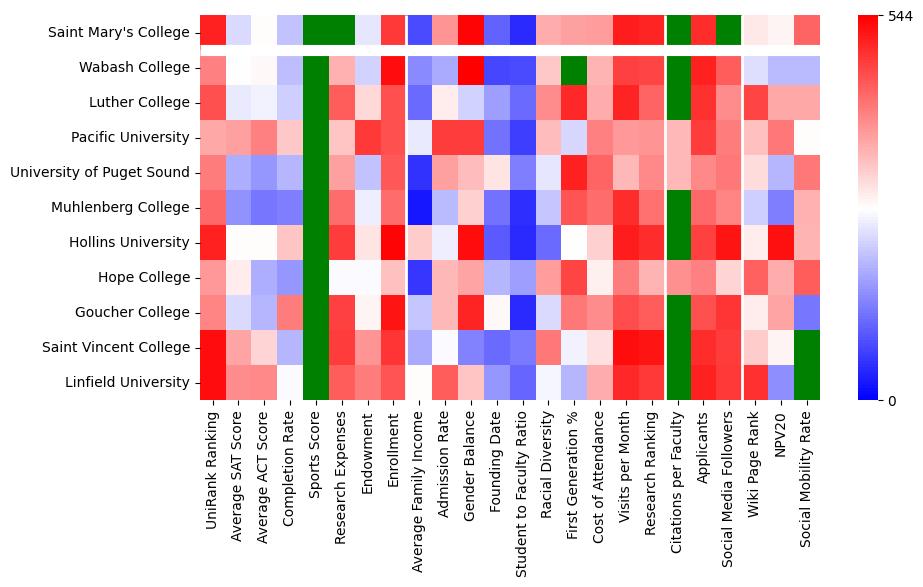
Saint Mary's College, founded in 1844, is a private Catholic liberal arts college located in Notre Dame, Indiana. Originally established by the Sisters of the Holy Cross, the college has a long-standing tradition of providing education rooted in Catholic values and a commitment to fostering the intellectual, spiritual, and social growth of women. With a picturesque 100-acre campus adjacent to the University of Notre Dame, Saint Mary's offers a serene yet vibrant environment that encourages both academic and personal development.
What sets Saint Mary's College apart is its dedication to the empowerment of women and the cultivation of leadership skills. As a women’s college, it provides a unique space where female students can thrive, supported by a strong network of alumnae and faculty mentors. The college emphasizes small class sizes and personalized attention, allowing students to build meaningful relationships with professors and peers. Additionally, its commitment to service and social justice is reflected in numerous community engagement initiatives and service-learning opportunities, reinforcing the college's mission to educate women to make a difference in the world.
Academically, Saint Mary's College boasts rigorous programs with a strong liberal arts foundation. The college offers more than 30 undergraduate majors, with standout programs in Nursing, Education, and Business Administration, which are particularly well-regarded. The Nursing program is recognized for its comprehensive curriculum and high NCLEX pass rates, while the Education program benefits from partnerships with local schools, providing students with hands-on teaching experience. The Business Administration program is acclaimed for its integration of ethical perspectives and global awareness in business practice. The college's emphasis on experiential learning ensures that students graduate with both theoretical knowledge and practical skills.
Despite its many strengths, Saint Mary's College faces some challenges. The college, like many small liberal arts institutions, has been navigating financial constraints, impacting its ability to expand facilities and programs. Additionally, while the college's intimate size is often a benefit, it can also limit the variety of courses and extracurricular activities available compared to larger universities. Furthermore, the college's single-gender focus, while empowering for many, may not appeal to all prospective students seeking a coeducational experience. Overall, while these factors present challenges, they are balanced by the college's strong community and enduring commitment to academic excellence and student development.